Top 10 Strategic Technology Trends for 2027
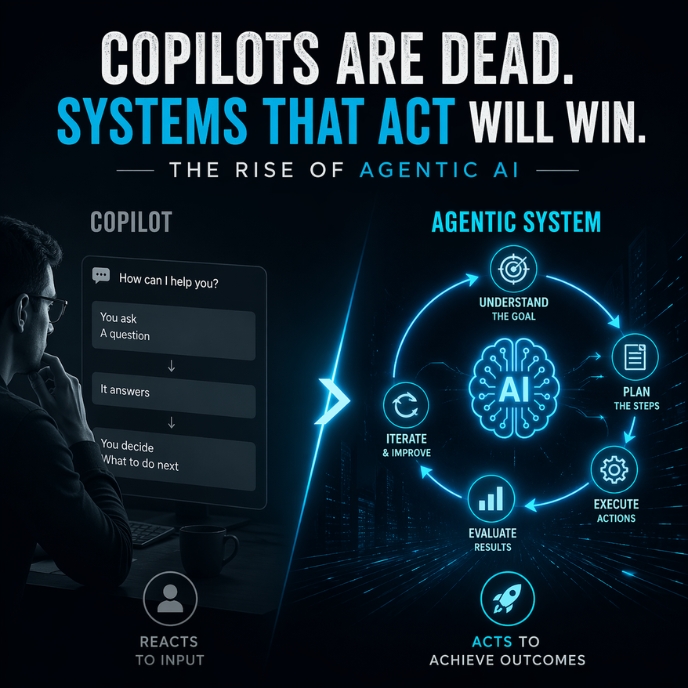
The technology landscape is rapidly evolving beyond traditional AI adoption. Enterprises are now entering an era where autonomous agents, intelligent simulations, advanced voice reasoning, and AI governance become core business capabilities rather than experimental initiatives.
According to Gartner’s 2027 Strategic Technology Trends, organizations should focus on three major themes:
✅ Leveraging the Non-Textual AI Frontier
✅ Governing Autonomous Agent Platforms
✅ Architecting Durable Agility
Let’s explore the ten trends expected to redefine enterprise technology over the next few years.
🚀 Trend Spotlight #1
Large Quantitative Models (LQMs)
While Large Language Models understand and generate text, LQMs are built specifically to analyze numbers, equations, simulations, and mathematical relationships.
Why It Matters
- Improved forecasting accuracy
- Better demand prediction
- Advanced operational simulations
- Enhanced risk analysis
Utility & Energy Use Case
Forecast power demand, renewable generation output, and grid stability with greater precision.
📌 Key Takeaway: AI is moving from language understanding to numerical reasoning.
🎙️ Trend Spotlight #2
Speech Reasoning Models
Voice AI is evolving beyond transcription and command recognition.
These models understand:
- Intent
- Context
- Human emotion
- Multi-step conversations
Business Impact
✔ Intelligent customer service
✔ Hands-free field support
✔ Voice-driven operational systems
Utility Example
Customers report outages through natural conversations while AI accurately captures location, severity, and context.
🌍 Trend Spotlight #3
World Models
World Models enable AI systems to understand how the real world behaves and predict the outcome of future actions.
Potential Applications
- Digital Twins
- Grid Simulations
- Smart Manufacturing
- Autonomous Operations
Utility Example
Simulate outage restoration scenarios before executing them in the field.
📌 Key Takeaway: Test first in a virtual world before acting in the real one.
🤖 Autonomous Agent Governance
As AI agents become digital coworkers, enterprises need robust governance frameworks.
🔍 Trend Spotlight #4
AI Context Platforms
AI performs best when it understands business context.
Context platforms provide:
- Enterprise knowledge
- Operational rules
- Historical information
- Process guidance
Benefits
✅ More accurate AI responses
✅ Reduced hallucinations
✅ Better decision-making
Utility Example
AI agents accessing outage history and asset records before recommending actions.
👨💻 Trend Spotlight #5
AI Coding Agent Harnesses
AI-generated software is becoming mainstream.
Organizations will increasingly require controls to:
- Validate code
- Enforce standards
- Run security checks
- Monitor AI development activities
Benefits
- Faster development
- Higher productivity
- Better governance
📌 Key Takeaway: Trust AI-generated code, but verify it.
🔐 Trend Spotlight #6
AI Agent Identity
Digital agents will require their own identities, permissions, and accountability frameworks.
Why Important?
If an AI agent can:
- Create records
- Access systems
- Modify configurations
Then it must be managed similarly to human users.
Enterprise Impact
- Zero Trust Security
- Identity Governance
- Access Auditing
- Compliance Tracking
🛡️ Trend Spotlight #7
Autonomous Exposure Remediation
Cybersecurity is shifting from detecting problems to automatically fixing them.
Capabilities
✔ Identify vulnerabilities
✔ Prioritize risks
✔ Apply remediation automatically
Benefits
- Reduced response times
- Lower security risk
- Improved resilience
Utility Example
Automatically isolating vulnerable systems before threats spread across operational technology environments.
🏛️ Durable Agility for Future Enterprises
Organizations need architectures that remain resilient despite technology, regulatory, and market changes.
🌐 Trend Spotlight #8
SovereignTech
Organizations increasingly want control over:
- Data
- Cloud infrastructure
- AI models
- Applications
Why This Matters
Growing concerns around:
- Regulatory compliance
- Data residency
- Vendor lock-in
- National security
Utility Example
Hosting critical grid applications within approved geographic boundaries.
⚙️ Trend Spotlight #9
Disposable Applications
AI-driven development is making software creation faster and cheaper.
This enables businesses to build applications specifically for:
- Short-term projects
- Events
- Campaigns
- Temporary operational needs
Benefits
✅ Rapid innovation
✅ Lower maintenance costs
✅ Faster experimentation
📌 Key Takeaway: Future applications may be built for weeks instead of years.
🧠 Trend Spotlight #10
Wetware as a Service (WaaS)
One of the most futuristic concepts identified by Gartner.
Wetware refers to technologies that connect biological systems directly with digital systems.
Examples
- Brain-computer interfaces
- Neural feedback systems
- Human augmentation devices
Potential Impact
- Medical advancements
- Accessibility improvements
- Advanced workforce training
Long-Term Vision
Humans and machines collaborating through direct neural interaction.
⚡ What This Means for the Utility Industry
The power and utility sector is uniquely positioned to benefit from several of these trends.
High-Impact Opportunities
Trend | Utility Application |
Large Quantitative Models | Load forecasting & demand prediction |
World Models | Grid digital twins |
AI Context Platforms | Operational decision support |
Autonomous Remediation | Cybersecurity automation |
SovereignTech | Critical infrastructure protection |
Speech Reasoning | Customer outage management |
💡 Final Thought
The next wave of innovation is not about making AI smarter. It’s about making AI trustworthy, governable, and capable of operating as an integral part of the enterprise workforce. Organizations that invest today in autonomy, governance, and resilience will lead tomorrow’s digital economy.