Your AI Isn’t Intelligent. It’s Just Expensive Without Orchestration

Let’s be direct.
Most AI systems today are not intelligent.
They are:
- A prompt
- A model call
- A response
Wrapped in a UI.
That’s it.
There is no:
- Planning
- Multi-step reasoning
- Execution control
And yet, these systems are:
- Expensive
- Hard to debug
- Difficult to scale
Why?
Because they lack orchestration.
Orchestration is what turns:
Outputs
Into: Outcomes
Let’s define it.
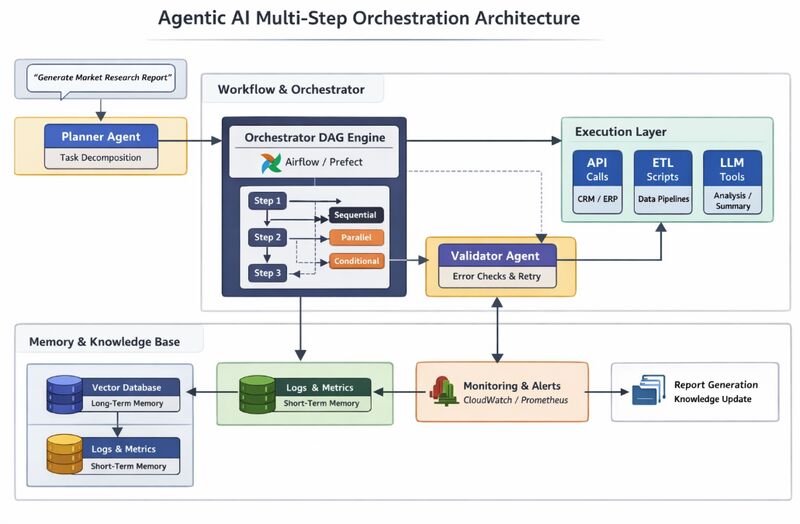
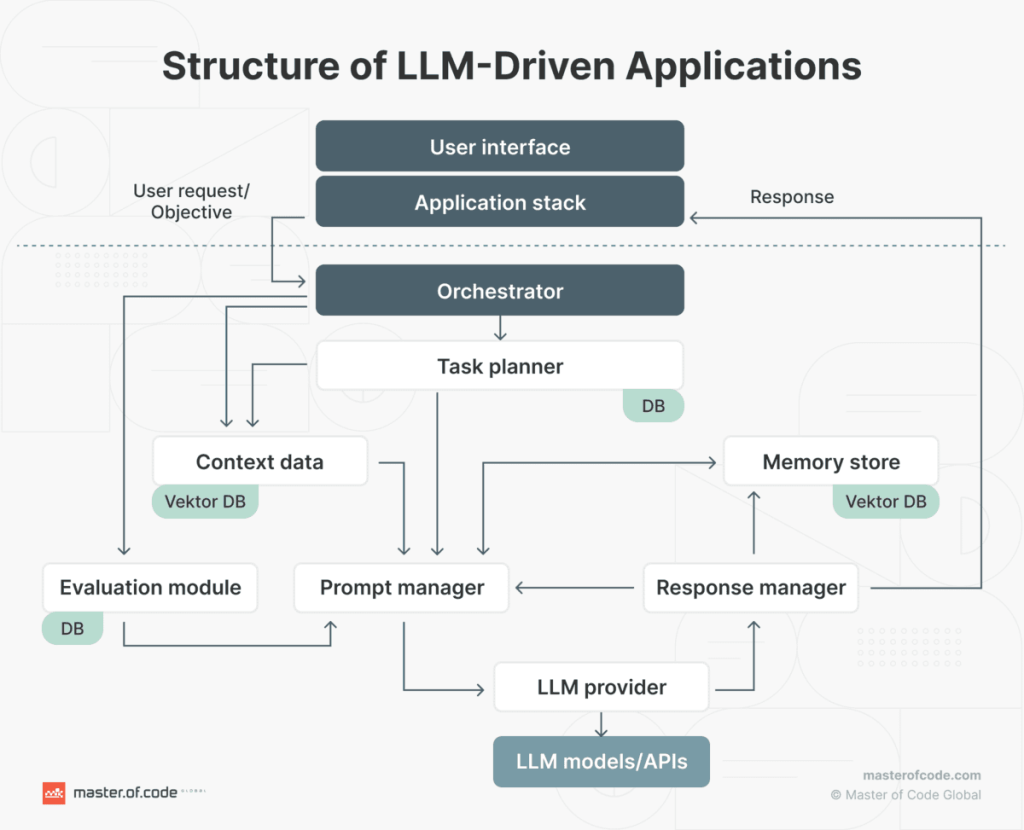
Orchestration is:
- Structuring workflows
- Managing steps
- Controlling execution
- Validating results
Without orchestration: Your system is stateless.
Each request:
- Starts from scratch
- Has no memory
- Has no continuity
That leads to:
- Repeated computation
- Increased cost
- Inconsistent results
Now let’s look at what orchestration enables.
- Multi-step workflows
Break tasks into manageable steps - Context management
Carry forward relevant information - Decision checkpoints
Validate before proceeding - Tool integration
Call APIs, databases, services - Error handling
Retry, fallback, escalate
This is where real value comes from.
Not from: Better prompts
But from: Better flow design
Let’s talk cost.
Without orchestration:
- You send large context repeatedly
- You make redundant calls
- You increase token usage
With orchestration:
- You reuse results
- You minimize calls
- You control context size
That’s cost optimization.
Now reliability.
Without orchestration:
- Failures are random
- Outputs are inconsistent
With orchestration:
- Behavior is controlled
- Failures are handled
That’s production readiness.
Another key point:
Observability.
If you cannot:
- Trace steps
- Inspect decisions
- Analyze failures
You cannot operate the system.
Orchestration provides that visibility.
Now here is the uncomfortable truth.
Most teams skip orchestration because:
- It requires engineering effort
- It is not visible in demos
- It slows initial development
But in production: It is the difference between:
- A feature
- And a system
AI becomes valuable only when:
- It completes tasks
- Not just generates responses
And that requires:
- Structure
- Flow
- Control
In other words:
Orchestration.
So if your AI system today:
- Feels expensive
- Feels inconsistent
- Feels unreliable
The issue is not intelligence.
It is architecture.
Because intelligence without orchestration is just cost without outcome.