RAG Is Not a Strategy: Why Most Enterprise AI Implementations Will Fail
Visual Overview
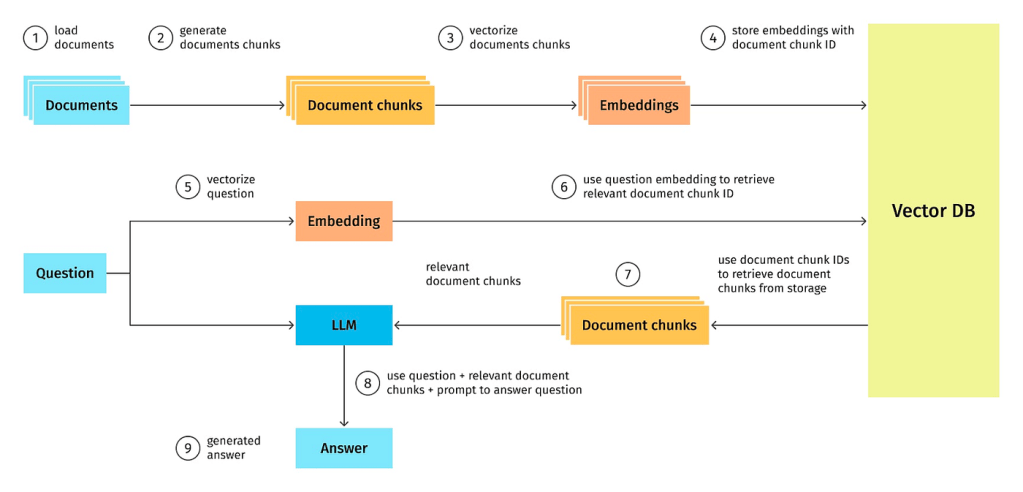
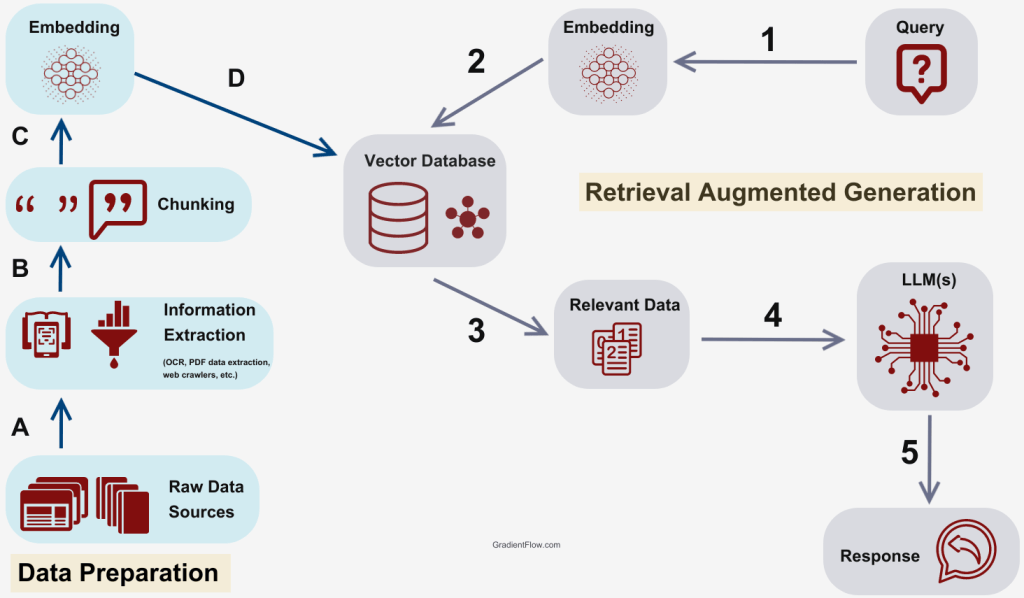
RAG is everywhere.
And that’s exactly the problem.
Most teams think: “If we implement RAG, we are enterprise-ready.”
That’s not true.
RAG is not a strategy. It is a pattern.
And like any pattern, it can be:
- Implemented correctly
- Or implemented poorly
Right now, most implementations are poor.
Let’s define what RAG actually is.
At its core:
- Retrieve relevant data
- Inject into model context
- Generate response
Simple.
But the complexity is hidden.
Let’s start with chunking.
Most teams:
- Split documents arbitrarily
- Ignore semantic boundaries
Result:
- Context becomes noisy
- Retrieval becomes inaccurate
Next problem: embeddings.
Questions to ask:
- Are embeddings domain-tuned?
- Are they refreshed when data changes?
Most teams don’t even track this.
Then retrieval.
Typical issues:
- Top-K retrieval without ranking
- No filtering based on context
- No relevance scoring validation
So what happens?
The model gets:
- Too much data
- Or irrelevant data
Both degrade output quality.
Now the biggest issue:
No evaluation.
Teams assume:
“If it returns an answer, it works.”
That’s dangerous.
You need:
- Ground truth datasets
- Accuracy measurement
- Failure classification
Without this: You cannot improve the system.
Another overlooked factor:
Access control.
In enterprise environments:
- Not all data is accessible to all users
If your RAG system ignores this:
You risk:
- Data leakage
- Compliance violations
Now let’s talk freshness.
Static embeddings:
- Become outdated
- Drift from source data
Without re-indexing strategies:
Your system slowly becomes unreliable.
Now the uncomfortable truth.
Most RAG systems:
- Work in demos
- Fail in production
Because they ignore:
- Data engineering
- System design
- Evaluation pipelines
RAG is not plug-and-play.
It requires:
- Careful data modeling
- Retrieval tuning
- Continuous monitoring
Used correctly:
RAG improves:
- Accuracy
- Explainability
- Trust
Used poorly:
It creates:
- Confidently incorrect answers
- Increased latency
- Higher costs
The real question is not:
“Do you have RAG?”
It is:
“Is your retrieval pipeline engineered or improvised?”
Because that determines everything.