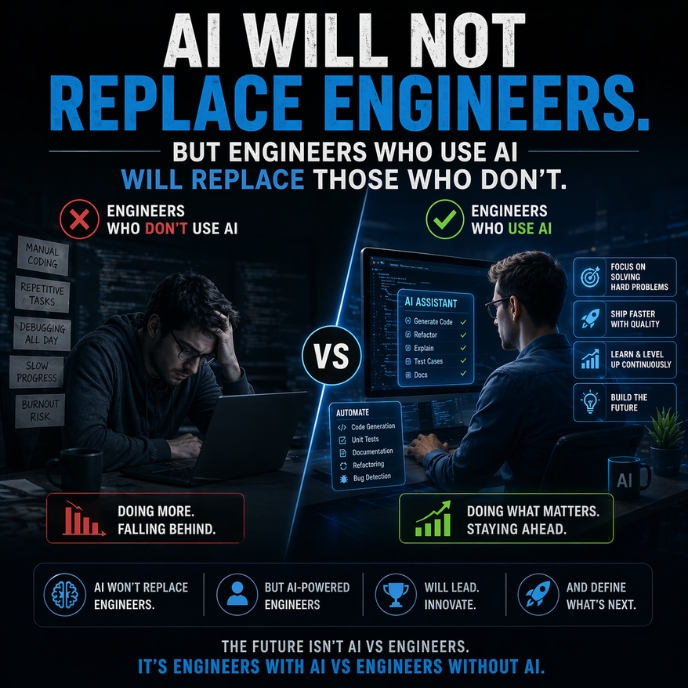
The AI Skill Gap Isn’t Where We Think It Is
A few weeks ago, my Instagram feed suddenly looked like it belonged to another generation. People were posting photographs of themselves in the style of the 1980s — vintage clothes, old-school hairstyles, film-camera grain, classic poses and that familiar family-album feel. Some of the photographs looked so convincing that they could easily have been taken decades ago. Except they weren’t. They were created using AI.
What fascinated me wasn’t just the quality of the images. It was how quickly the trend caught on. One person tried it, another followed, friends started sharing their versions, and within days, the 1980s seemed to have made a comeback on Instagram. People who had never experienced that era were suddenly recreating it with a simple photograph and a prompt. There was no lengthy training, no user manual and no formal workshop. There was simply curiosity, experimentation and a willingness to try something new.
And that got me thinking. Not about the photographs, but about how quickly we have become comfortable with AI. A technology that felt unfamiliar not long ago has already become part of everyday life. We use it to transform photographs, write captions, plan trips, explain difficult concepts, create presentations, draft emails and sometimes simply satisfy our curiosity. The adoption is no longer the most interesting part of the AI conversation. The judgment behind that adoption is.
According to ADP’s People at Work 2026 research, 80% of employees surveyed in India use AI multiple times a week, while 41% say they use it almost every day. India recorded the highest level of frequent workplace AI use among the markets covered by the research. That statistic made me pause. If AI is already becoming part of everyday working life for such a large proportion of employees, should organizations still be asking only, “How do we train our people to use AI?”
Perhaps we should be asking a slightly different question: Do our people know when to use AI, when to question it, and when not to use it at all?
Think about that 1980s photo trend. If the AI gives you a hairstyle that is slightly wrong, changes the background or makes you look ten years younger than you actually are, you laugh about it and post the picture anyway. There isn’t much at stake. But imagine carrying the same level of trust into the workplace. An AI tool drafts an email to a client. It sounds professional, so we send it without reading every line. AI summarizes a meeting, so we assume everything important was captured. AI analyzes employee data, and because the conclusion sounds logical, we accept it. AI prepares a proposal that looks polished and convincing, so we assume the content must be equally reliable.
But convincing is not the same as correct.
I recently came across a simple workplace situation that brought this home. Someone had to prepare a detailed document within a tight deadline and used AI to create the first draft. What would normally have taken hours was completed in a fraction of the time. On the surface, it looked like a perfect example of AI improving productivity. But when the document was reviewed, a few assumptions needed to be corrected and some details needed verification. The structure was good and the language was strong, but it was the human review that made the final version reliable. The AI had done its job. The employee still had to do theirs.
That, to me, is where the next AI skill gap is going to emerge. We have spent a lot of time talking about prompting — how to write better instructions, ask better questions and get better outputs. Those skills certainly matter. But perhaps the more valuable skill is what happens after we receive the answer. Can we challenge it? Can we identify what needs verification? Can we recognize when the context doesn’t fit? Can we spot an assumption that shouldn’t be there? Can we understand when the information is sensitive? And perhaps most importantly, can we decide that AI shouldn’t be involved in a particular task in the first place?
That is a much broader definition of AI literacy. It is not simply knowing how to use a tool. It is knowing how much responsibility to give that tool.
AI can help us produce an answer, but it cannot take responsibility for the answer. If AI drafts the proposal, we own the proposal. If AI creates the analysis, we own the conclusion. If AI suggests the solution, we own the decision. The technology may have contributed to the work, but accountability doesn’t move from the human to the machine simply because a tool was involved.
This is particularly important for managers. A manager may once have asked, “Are you using AI?” But perhaps the better question now is, “How are you validating what AI gave you?” That small change reflects a much bigger shift in the workplace. The conversation shouldn’t be about whether employees are using AI. It should be about whether they are using it thoughtfully.
Microsoft’s 2026 Work Trend Index points in the same direction. Among Indian AI users surveyed, 63% identified quality control of AI output as an important skill, while 59% highlighted critical thinking. The research also found that many Indian workers see AI as a starting point rather than a final answer. In other words, the ability to review, question and improve AI-generated work is becoming just as important as the ability to generate it.Lorem ipsum dolor sit amet, consectetur adipiscing elit. Ut elit tellus, luctus nec ullamcorper mattis, pulvinar dapibus leo.
For HR and L&D teams, this should change the way we approach AI upskilling. An AI training program shouldn’t simply be a session on five AI tools or ten useful prompts. It should also cover data privacy, confidentiality, accuracy, bias, intellectual property, verification and responsible decision-making. Employees need to understand that not every task needs AI simply because AI can perform it.
Sometimes the best use of AI is to make our work faster. Sometimes it can help us see a problem differently. Sometimes it can remove repetitive work and give us more time to focus on people, customers and ideas. And sometimes, the right decision is still to close the AI window and use our own experience, judgment and conversation.
The 1980s Instagram trend was harmless fun, but it demonstrated something important. AI adoption can happen much faster than organizations expect. People don’t always need months of training before they start experimenting with a new technology. Sometimes curiosity is enough. The bigger responsibility for organizations is to make sure that curiosity is accompanied by judgment.
Because the future employee won’t necessarily be the person who knows the most AI tools. It may be the person who knows when to trust AI, when to question it, when to verify it and when to leave it out of the equation altogether.
The real AI skill gap may not be between people who use AI and people who don’t. It may be between people who use AI to replace their thinking and people who use AI to strengthen it.
And perhaps that is the AI skill we should be building next.
Author
Shenba Vignesh