
Microsoft Certifications are structured across four levels:
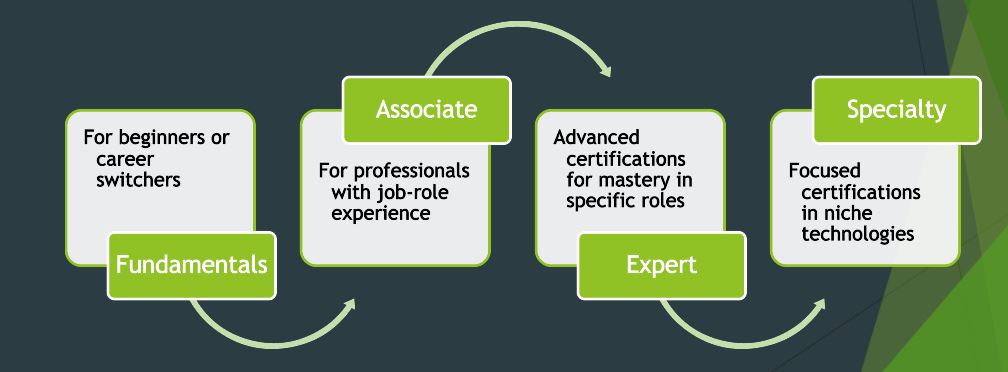
Fundamentals Certifications
Ideal for those new to IT or a specific domain.
Popular Certs:
- Azure Fundamentals (AZ-900)
- Microsoft 365 Fundamentals (MS-900)
- Security, Compliance, and Identity Fundamentals (SC-900)
- Power Platform Fundamentals (PL-900)
- Dynamics 365 Fundamentals (MB-910/MB-920)
Associate Certifications
Validates job-ready skills in a specific role.
Popular Certs:
- Azure Administrator (AZ-104)
- Microsoft 365 Administrator (MS-102)
- Power Platform App Maker (PL-100)
- Azure Developer (AZ-204)
- Security Operations Analyst (SC-200)
Expert Certifications
Advanced-level certifications for experienced professionals.
Popular Certs:
- Azure Solutions Architect Expert (AZ-305 + AZ-104)
- Microsoft 365 Enterprise Administrator Expert (MS-102 + associate cert)
- Cybersecurity Architect Expert (SC-100)
- DevOps Engineer Expert (AZ-400 + prerequisite)
Specialty Certifications
Focuses on niche and advanced technical roles.
Examples:
- Azure AI Engineer (AI-102)
- Azure IoT Developer (AZ-220)
- SAP on Azure (AZ-120)
- Azure Virtual Desktop (AZ-140)
Career Path: Cloud Administrator / Architect
- Start: AZ-900
- Intermediate: AZ-104
- Advanced: AZ-305, AZ-400
Career Path: Software Developer / DevOps
- Start: AZ-900
- Intermediate: AZ-204
- Advanced: AZ-400
Career Path: Security Engineer / Cybersecurity
- Start: SC-900
- Intermediate: SC-200, SC-300, SC-400
- Advanced: SC-100
Career Path: Data/AI Engineer
- Start: DP-900 / AI-900
- Intermediate: DP-203, PL-300, AI-102
Career Path: Microsoft 365 Specialist
- Start: MS-900
- Intermediate: MS-102, MS-700, SC-300
- Advanced: M365 Enterprise Expert
Career Path: Power Platform Specialist
- Start: PL-900
- Intermediate: PL-100, PL-200, PL-300, PL-400, PL-500


